Local detail
What Is Going On
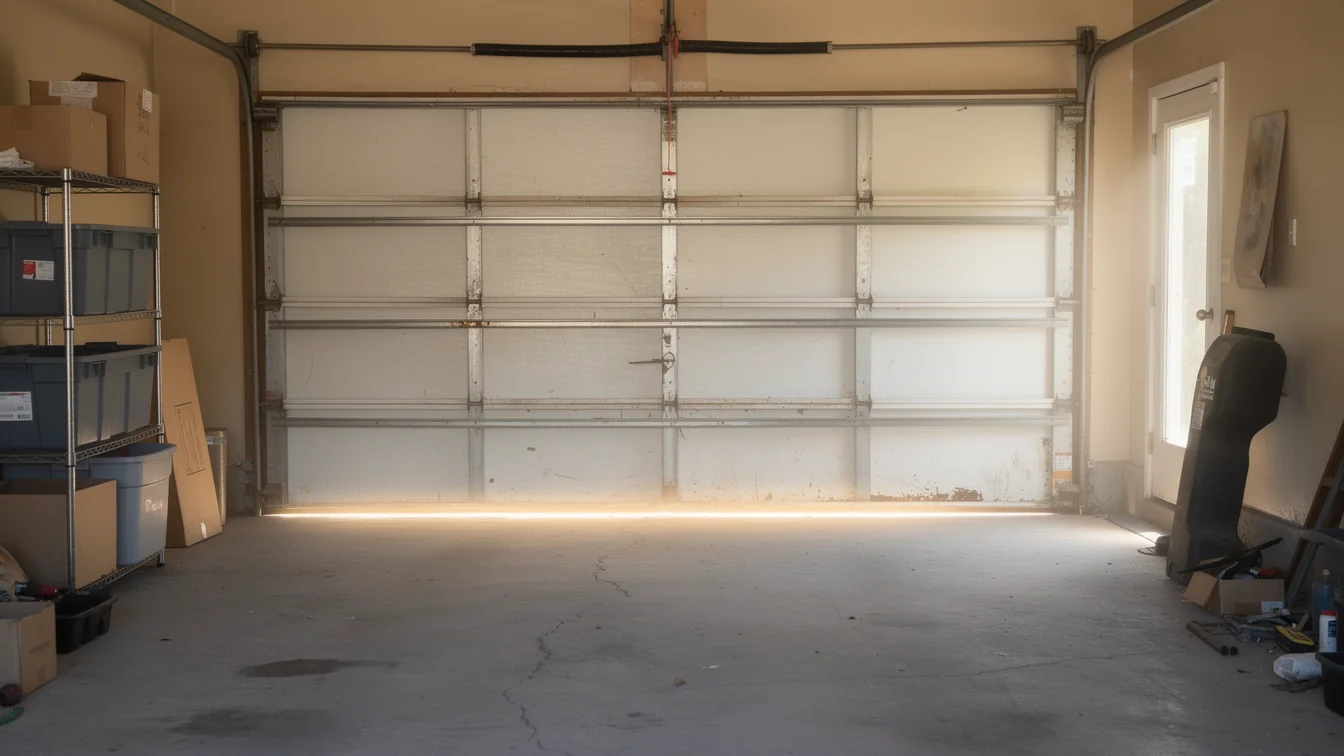
Most houses around Chapel Hill went up between 1967 and 2006, with the bulk of that stock dating to the 1980s and 90s. That matters because a door installed when a house was built is now anywhere from 20 to nearly 60 years old, and garage door hardware wasn't built to last that long without attention. Springs lose tension, galvanized cable starts to fray at the drum, and the original opener - if it's still the one that came with the house - is probably a chain-drive unit with a logic board that's long past its expected service life.
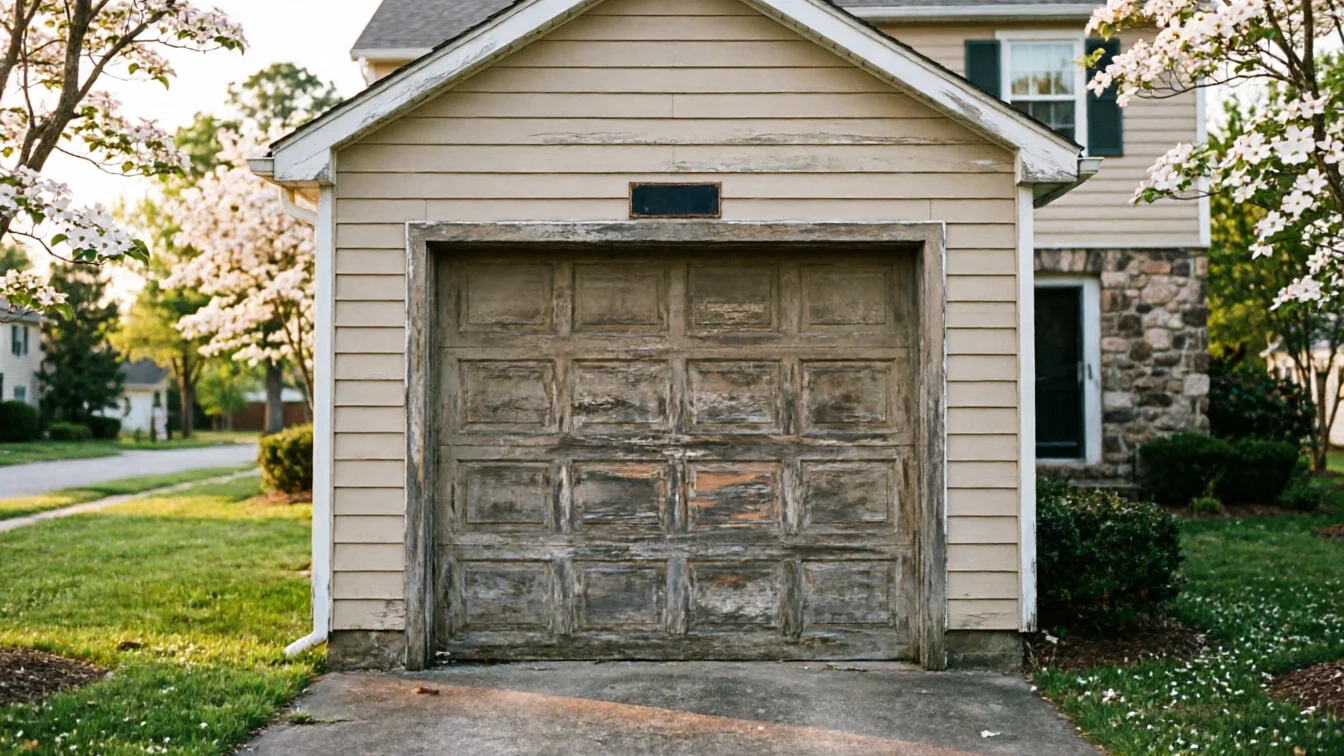
The door panel itself usually outlasts everything else. Steel and wood panels from the 1980s and 90s hold up fine structurally if they've been painted and the bottom seal replaced now and then. What fails first is almost always moving parts: springs, rollers, the opener's drive mechanism, and worn hinges that let a panel sag at the seam. So the real question isn't how old the door looks, it's which parts have already been swapped out and which are still original.
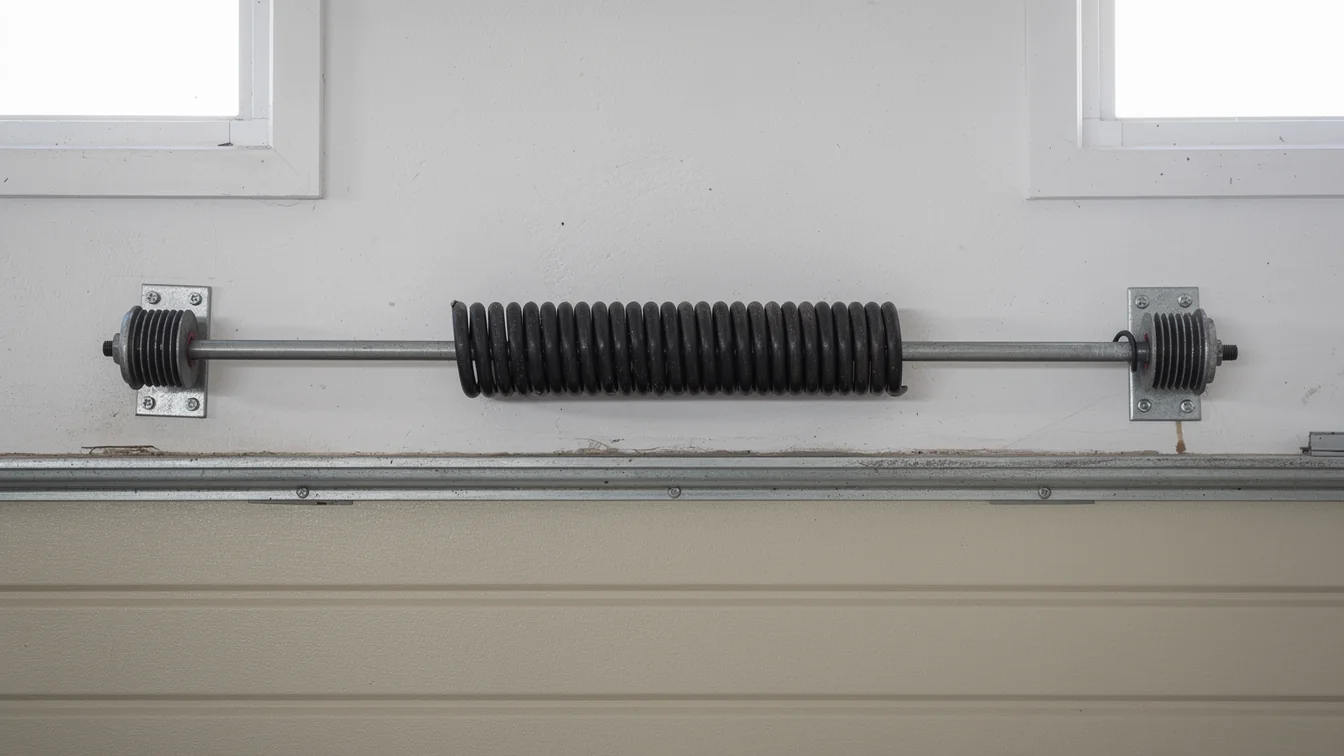
If you don't know when your springs were last replaced, that's worth finding out before you decide anything. A torsion spring rated for 10,000 cycles on a door used twice a day lasts about 13-14 years - which means a lot of the 1994-era median-build homes in this area are now on borrowed time with their original springs, whether or not they've broken yet.
The area
When to Call Someone
Call before a spring snaps, not after, if you can help it. Warning signs on an older door: a loud bang from the spring area, the door drifting down on its own after you open it, or the opener straining and reversing partway through a cycle. Any of those point to a spring that's lost tension, which is a job for someone with the right bars and clamps, not a weekend project.
If your opener is original to a house built in the 1980s or 90s, it's also worth a look even if it still runs. Circuit boards in that generation of openers don't have modern safety reversal sensors built in the same way current units do, and replacement parts for a 30-plus-year-old opener are getting hard to source.
Call sooner rather than later if the door is the only way into an attached garage that leads to the house - a dead spring on that kind of door isn't just inconvenient, it can lock you out of part of your own home until it's fixed.
What we find
The Common Mistake
The mistake we see most with doors from this era is treating every failure as a reason to replace the whole unit. A worn spring, a bent track, or a failing opener logic board are each independent repairs - you don't need a new door because the opener quit, and you don't need a new opener because a cable frayed. Given that a lot of the housing stock here dates to the 1980s and 90s, the panels themselves are often still structurally sound insulated steel or wood, even when the hardware around them is tired.
The flip side mistake is patching a door that's actually done. If the bottom panel has rusted through, if the track is bent badly enough that it's been reshaped more than once, or if you're replacing the same spring every couple of years because the door is undersized for a heavier insulated retrofit, that's a door worth retiring rather than feeding parts into indefinitely. We won't talk you into replacing something that just needs a spring and a service call - but we also won't keep re-patching a door that's past the point where repair makes financial sense.
How we work
How Local Conditions Play In
Chapel Hill sits in a cold-moderate climate band, which means winter cold snaps and humidity swings through the year, not the extreme heat or hurricane wind load you'd plan for further south or east. For garage doors, that mix mostly shows up as metal contraction in cold weather - a track that's slightly out of alignment in summer can bind or make noise once temperatures drop, and steel springs lose a bit of flexibility in the cold, which is when an already-weak spring is more likely to finally let go.
Humidity cycling is the other factor. Wood panels and wood-trimmed doors common on older homes in this area expand and contract with moisture swings, which loosens hinge screws and panel seams over years. That's less dramatic than a coastal salt-air problem, but it's a steady, slow wear pattern that matches the age of a lot of doors built when these neighborhoods went up.
None of this means you need a different door than what's already there. It means seasonal service - checking spring tension and track alignment before winter - does more good here than in a climate with less temperature swing.
Talk to a local pro
Garage door trouble in Chapel Hill?
Same-day service with honest, upfront quotes.